Friday, June 2, 2017

Best Windows 10 apps this week

Two-hundred-and-thirty-three in a series. Welcome to this week's overview of the best apps, games and extensions released for Windows 10 on the Windows Store in the past seven days.

Windows 10's growth continued in May, but at a snail-like pace. The operating system increased its share by 0.5 percent, down from the 0.92 percent growth the month before that.

As always, if I missed an app or game that has been released this week that you believe is particularly good, let me know in the comments below or notify me via email instead.

Discounts this week

The following list is a selection of the best deals. Make sure you check out the Store for all offers.

Some apps are discounted for more than one week. Only new apps and games are listed below. Check out the previous post in the series for past offers that may still be valid.

New apps and games

Quantum Revenge ($1.99, free trial available)
quantum

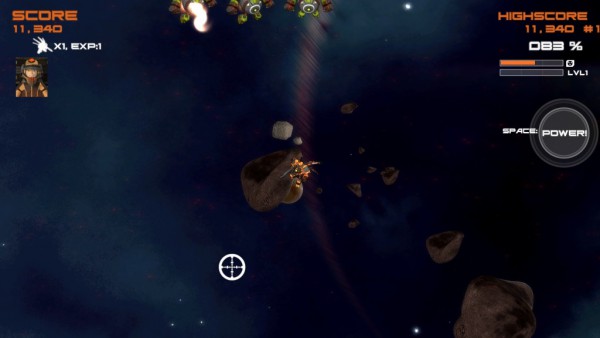
Quantum Revenge is an arena shooter that takes place in space. You take control of a mecha, and try to survive for as long as possible by defeating enemy ships and avoiding asteroids.

The game ships with six different mecha that you can customize and upgrade. The game plays with touch, mouse and keyboard, or joysticks.

F.Lux
flux

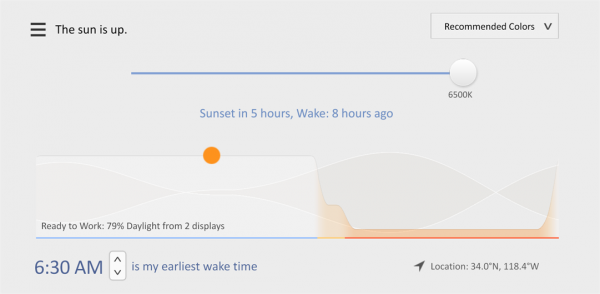
The popular desktop program F.Lux is now also available as a Windows application. It makes the color of the computer screen adapt to the time of the day to help you sleep better at night.

Color temperature is normal during the day, and toned down at night. The app features the same options as the desktop program. You can keep the default settings, or customize them using the program's settings.

Scan Archive
scan

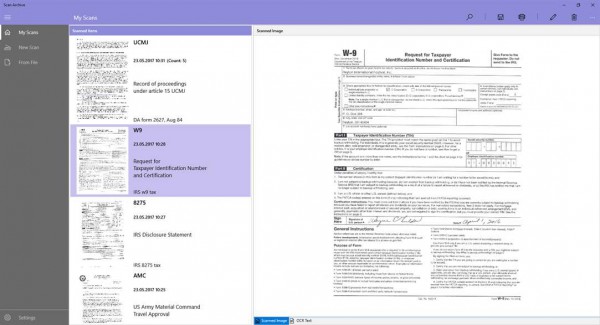
Scan Archive is a free application (with in-app purchases) that is an all-in-one scanning solution for Windows 10.

The app supports the scanning of documents (including feeder support), OCR to search within text of scanned documents, and acts as an archive for all scanned documents on top of that.

You may search your archives, export documents as images, or as documents.

SoundCloud (Beta)
soundcloud

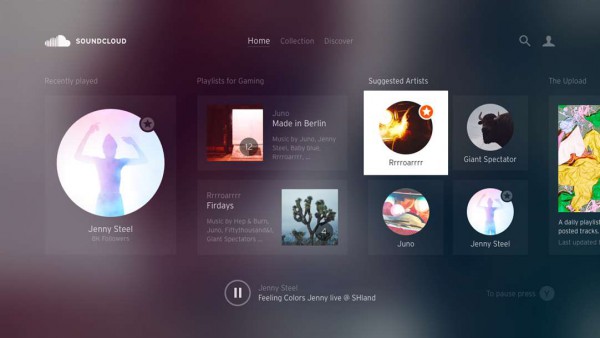
SoundCloud Beta brings the popular music hosting and streaming service to Windows 10.

You need to sign in to a SoundCloud account or create a new one to use the application.

The app lets you search and browse available music on SoundCloud, and upload music to the service.

Music continues to play in the background, and you can make use of all kinds of nice-to-have features such as mood-based playlists, or related track suggestions.

TeamViewer Blizz
blizz

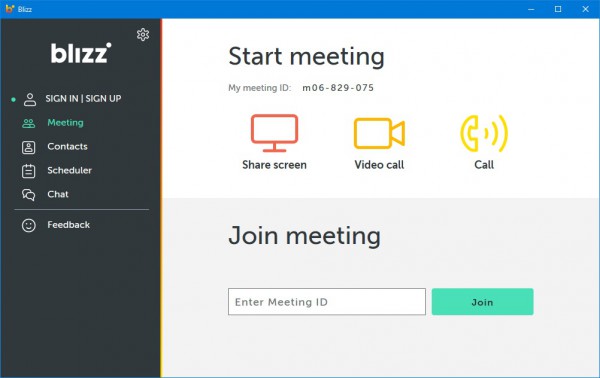
TeamViewer Blizz lets you start and join meetings without creating an account first. The app features a contacts list and chat support, and works across platforms (PC, Mac, Android and iOS).

Blizz should work behind firewalls according to the product description, and you may set up user rights for a meeting. This includes speaking, chatting and file sharing rights.

A whiteboard is provided, and you may share your entire screen, or select applications.

The app supports video conferencing, VOIP and phone, and is built on TeamViewer technology.


Source: Best Windows 10 apps this week

Thursday, June 1, 2017

Yale and MoMA team up to resurrect visionary light works

Nearly a decade ago, a Seattle-based collector visiting New Haven, Connecticut, asked to see three works from the 1920s and 1930s by the artist Thomas Wilfred in the collection of the Yale University Art Gallery. The objects, two strangely resembling flatscreen televisions and one a lamp on a table, had remained deep in storage for decades. When the collector asked the accompanying curator and conservators to plug in and switch on the works, they were understandably hesitant. "One of us grabbed a fire extinguisher, just in case," says Keely Orgeman, Yale's assistant curator of American painting and sculpture, who has organised the gallery's current survey of Wilfred's light works. "But when we plugged the first one in, the ceiling was instantly filled with this multicoloured, swirling vortex."

A detail of Thomas Wilfred's Lumia Suite, Op. 158 (1963-64), which was restored for the exhibition (Image: courtesy of Yale University Art Gallery)

While Wilfred's light pieces might not be as well known today, for a time they attracted thousands of viewers, in concert halls and theatres as well as in museums. The artist James Turrell remembers seeing one piece during a visit to the Museum of Modern Art (MoMA), New York, that "stopped me in my tracks", he writes in the foreword to the exhibition catalogue. Another room-sized installation, Lumia Suite, Op. 158 (1963-64) remained on permanent view at MoMA from the year it was completed until 1980,when it was carefully dismantled and put into storage.A colour rotor for Lumia Suite, Op. 158 (1963-64) (Image: courtesy of Yale University Art Gallery)

A colour rotor for Lumia Suite, Op. 158 (1963-64) (Image: courtesy of Yale University Art Gall ery)

When Yale started planning its exhibition, the institution contacted MoMA about the works in its collection, including Lumia Suite, Op. 158. After some negotiations, the two museums agreed to collaborate on restoring the work at Yale's state-of-the-art Institute for the Preservation of Cultural Heritage. "Boxes and crates of stuff arrived and we had to figure out what piece was what," says Carol Snow, Yale's deputy chief conservator and senior conservator of objects. "We started to develop this mantra of 'some assembly required'."

Fortunately, Wilfred had the foresight to write a detailed 50-page technical manual for the work, which clearly explained the specifications for every component, and how the fit together. "Wilfred was a genius for writing and leaving that," Snow says.

As well as testing and updating the electrical wiring, creating a new screen and building a new black anodised aluminium mobile structure to house the projection elements, Snow had to track down a replacement for a key part: the 1,000-watt tungsten-filament GE light bulb at the heart of the work. No longer in production, the bulbs were originally manufactured for airport runways and lighthouses. "I wrote to the Coast Guard, I called airports, I found retired GE employees. I left no rock unturned," Snow says. With no way of sourcing the original bulbs, Snow turned to the Portland, Oregon-based glass artist Dylan Kehde Roelofs, who hand-crafts light bulbs for his own sculptural work. He created a set of new bulbs for Lumia Suite that will replace the halogen ones found as a back-up for when the show travels to the Smithsonian American Art Museum in Washington, DC (6 October-7 January 2018).

• Lumia: Thomas Wilfred and the Art of Light, Yale University Art Gallery, New Haven, until 23 July


Source: Yale and MoMA team up to resurrect visionary light works

Microsoft may be working on new Windows mobile software and hardware

Microsoft doesn't seem finished with mobile devices just yet, but is this the rumoured Surface Phone?

It has long been rumoured that Microsoft is working on something it calls the Surface Phone. After discontinuing its Windows Mobile operating system and Windows Phone lines, the company hasn't had a smartphone in a while. However, a new report from Thurrot.com cites two independent sources who told the publication that Microsoft is working on a new version of Windows being tested internally, along with a hardware device to go with it.

Further, the report states that Microsoft is "pursuing new experiences" with this device and the project is in "early days of development". It's worth noting that the device in question is not necessarily a smartphone, but it's a mobile device nevertheless. The Thurrot.com report says things may change dramatically by the time Microsoft is done with this new device and OS. The project is apparently slightly "beyond pure development stage", so it shouldn't be long before Microsoft releases it to the public.

Microsoft has been focusing on development of its Windows ecosystem for a while now, but the company has mostly focused on PC-like devices. The company received a lot of accolades for its new Surface Studio AIO, while the new Surface Pro and Surface Laptop are also part of Microsoft's future plans. The company is also going after Google's Chrome OS, with its new Windows 10S operating system.

Digit NewsDeskDigit NewsDesk  news@digit.in

The guy who answered the question 'What are you doing?' with 'Nothing'.

Other Popular Deals
  • Coolpad Note 5 (Royal Gold, 32...

  • LeEco Le 2 (Rose Gold, 32 GB)(3...

  • Lenovo Z2 Plus (Black, 32 GB)(3...

  • Interesting Galleries Best camera phones under Rs....
  • Best smartphones to buy under Rs. 7,000 in India right now

    14 upcoming mobile phones you should expect in India in 2016

  • 10 smartphone sequels to look forward to in 2015

    Best smartphones under Rs. 15,000 with great battery backup

  • 10 best smartphones between Rs. 10,000 to Rs. 20,000...

    26 upcoming & latest smartphones to check-out

  • Slimmest phones you can buy in India [November 2015]

    The best upgrade options for 10 classic smartphones

  • Huawei P8: First Look

    Xiaomi Mi4i vs Asus Zenfone 2 (2GB): Quick Comparison

  • LG G4: First Look

    Asus Zenfone 2 and Zenfone Selfie: In Pictures

  • Sony's current & upcoming Xperia phones: An Overview

    Micromax Canvas Sliver 5: First Look

  • Sony Xperia C4: First Look

    Coolpad Dazen X7 and Dazen 1: In pictures

  • ​
    Source: Microsoft may be working on new Windows mobile software and hardware

    Wednesday, May 31, 2017

    Nokia release aims to shock Android and iPhone this month

    This week the folks at Nokia have revealed that they're ushering in a new era for Nokia smartphone. This is the month where users can expect a set of new Nokia brand smartphones with Android inside to be released around the world. Much like we expected to launch all the way back at the dawn of Nokia X, the Android Nokia from recently-acquired Nokia / Microsoft – this is the Android you might be looking for.

    Running STOCK Android, the Nokia 3, Nokia 5, and Nokia 6 are set to take the Android-loving marketplace by storm. Or at least in an ideal world they would – if they had the right marketing campaign. But of course they don't, more than likely, given the lack of attention these devices have gotten thus far.

    Of course that's all conjecture – we don't know how well these devices have sold in the very few places they're out in the wild so far. Once they're released internationally, we'll have to cross our fingers that their USA-based distributors are on task and ready to roll with the full brunt of the midrange smartphone-loving userbase that's been around since Nokia ran head-first into Windows Phone.

    While Apple's iPhone has remained largely similar generation-to-generation over the past several years, Nokia's been off the market. Nokia Lumia phones with Windows Phone never outsold the iPhone – nor did they outsell the Samsung Galaxy line – but users remain excited to own another. Take a peek at Reddit right now and see how pumped up the Android-loving smartphone user comments are.

    Nokia Windows Phone devices were really great – or at least their hardware was. Batteries lasted an extended amount of time and cameras were decent – if not revolutionary for their time. Have a peek at our original Nokia Lumia 920 Review to see what some of the fuss was about. Then behold our original Nokia Lumia 520 Review to see what the rest of the fuss was about.

    ABOVE: Nokia 3 as presented by Nokia Mobile. BELOW: Nokia 5 as presented by Nokia Mobile. Both of these devices will become available internationally later this June.

    Even despite the inevitable doom of Windows Phone software, Nokia smartphones were great. Here in 2017, we have no good reason to assume they'll be anything but great again. The people behind the designs and construction of Nokia phones in 2017 have the access and the knowhow necessary to make hearty smartphones for relatively low prices.

    The release of the Nokia 6 will very likely come just before the Nokia 5 and Nokia 3. Going by the schedule shared for international consumers to the smartphone sales outlet Clove, Nokia 3 and Nokia 5 will be available starting on June 30th, 2017.

    Pricing for each smartphone will be revealed when the devices hit the market, or just before. If we're to go by the prices Clove has listed, the Nokia 3 will cost around $160 (converted to USD straight from GPB), the Nokia 5 will cost around $240, and the Nokia 6 will cost closer to $300.

    Have a peek at the timeline below for more information on all three of the next Android devices from Nokia. This is not a Nokia X situation. Do not worry about the brand trying to use Android to make you want to use Windows Phone! It's time Android came back to stock!

    [nokia]


    Source: Nokia release aims to shock Android and iPhone this month

    Qualcomm shows off Windows 10 on ARM prototype

    Published by Steve Litchfield at 10:19 UTC, May 31st 2017

    At Computex 2017, Qualcomm has been showing off their 'Windows 10 on ARM' prototype ultra-mobile PC, in a form factor that's smartphone/phablet in principle, though obviously heavily 'proto' in terms of build and thickness. All very interesting in terms of what might come into production in 2018 in the mobile space. Perhaps the new Composable shell will look like Windows 10 Mobile on 'phones' and then, when plugged into Continuum displays, it will resolve to a full Windows 10 desktop and then allow Win32 emulation etc.?

    From the Qualcomm press release:

    Attendees at Computex will be able to experience a Windows 10 PC prototype, for the first time powered by the flagship Qualcomm Snapdragon 835 Mobile PC Platform. With the first-ever launch of sleek, innovative, fanless devices running Windows 10 PC devices powered by Snapdragon 835 are expected to be available from Asus, HP, and Lenovo.

    In December at Microsoft's Windows Hardware Engineering Conference (WinHEC), Microsoft's Terry Myerson (EVP, Windows and Devices Group) invited Qualcomm Technologies' Cristiano Amon to the keynote to announce that Windows 10 is coming to the premium-tier Snapdragon platform.

    Consumers will get the Windows 10 experience they know and love. With Snapdragon, hardware makers can create Windows 10 PCs that are thin, light, fan-less, and designed to deliver long battery life. With the integrated Snapdragon X16 LTE modem, your Windows 10 device can support blazing fast Gigabit internet speeds for a virtually anytime, anywhere experience.

    The device on display at Computex is running on our small development platform, but it's set up like a desktop PC. We attached a 46-inch monitor, wireless keyboard, and wireless mouse, and loaded it with familiar apps like Microsoft Office and other great apps so attendees can experience productivity and entertainment on Windows 10 powered by Snapdragon. We've also set up a Gigabit LTE network so attendees can experience the extreme speed supported by the integrated Gigabit LTE modem.

    Stay tuned for more information as we launch sleek, innovative, fanless devices running Windows 10 PCs powered by the Snapdragon 835 Mobile PC Platform.

    Interesting stuff. But what about when NOT 'set up like a desktop PC'? In other words, how will this fare when set up as an ultra-mobile, as a phablet, etc? I guess we just don't know yet what's involved.

    The prototype/demonstrator was interesting, as usual, shown below. It clearly has a phablet like form factor, with large touchscreen and smartphone front camera, flash and sensors, though the prototype is crazily thick. I wonder how much this could be slimmed down for production use one day?

    The still above is from the video embedded below, showing more of Windows 10 running on this ARM portable demonstrator:

    Source / Credit: Qualcomm

    Filed: Home > Flow > Qualcomm shows off Windows 10 on ARM prototype

    Platforms: GeneralCategories: Link of Interest, Hardware, Industry 

    Please enable JavaScript to view the comments powered by Disqus.


    Source: Qualcomm shows off Windows 10 on ARM prototype

    Tuesday, May 30, 2017

    Microsoft Corporation : (MSFT) Surface Phone to Come in 3 Different Variants

    The tech company is determined to make a strong comeback in the smartphone game with the launch of its Windows 10-powered smartphone line-up

    Microsoft Corporation (NASDAQ:MSFT) might have flown out of the smartphone spectrum for quite a while now, but it is determined to make a strong comeback with its next-gen Windows 10, powered smartphone line-up. Referred to as the Surface Phone, the companys next flagship smartphone would arrive in interesting variants.

    While Microsoft itself is yet to confirm the existence of such a Surface-branded device, the company CEO Satya Nadella has hinted at the arrival of a possible game-changing Windows 10, powered smartphone device in the market. Mr. Nadella has confirmed the tech giant would continue to make its contribution towards the smartphone world, despite its recent struggles with the Windows Phone platform. Also, the CEO himself has stated the companys next flagship smartphone might not look like what todays leading flagship devices prevail in the smartphone industry.

    According to speculations surrounding the Surface Phone, the smartphone would arrive on the market in three different variants, including an entry-level consumer model, a mid-range business model, and a high-end enthusiast model. Such rumors have also hinted the entry-level variant of the Surface Phone would arrive in the market for around $699, while the high-end variant of the smartphone device could go for as much as $1,100.

    All variants of the Surface Phone are expected to be powered by the latest Qualcomm Snapdragon 835 processing chipset. Also, the Windows makers next flagship smartphone will be powered by the latest Windows 10 operating system which should provide a more all-round performance for the smartphone device as compared to its Windows Phone platform.

    Reports have speculated Microsoft will not launch its next flagship smartphone until the first quarter of 2018.

    (c) 2017 Khaleej Times. All Rights Reserved. Provided by SyndiGate Media Inc. (Syndigate.info)., source Middle East & North African Newspapers


    Source: Microsoft Corporation : (MSFT) Surface Phone to Come in 3 Different Variants

    Monday, May 29, 2017

    Microsoft Originally Wanted Lumia 950 XL to Be a Samsung Galaxy Note Killer

    Lumia 950 and 950 XL were unveiled by Microsoft in October 2015 with much fanfare as the company's latest and greatest mobile phones, but despite the original hype, the two devices quickly lost their excitement factor, mostly due to bugs and lack of interest in the platform from Microsoft's part.

    An unreleased video that was published by WindowsCentral shows that both the Lumia 950 and 950 XL were originally supposed to be two major hits for the mobile business, helping Microsoft increase the share of Windows Phone and appeal to many more buyers.

    Probably the most interesting, though not surprising, feature of Lumia 950 and 950 XL revealed in this video is support for pen. As we heard so many times before, Microsoft wanted to bring stylus support on its Lumia phones a long time ago, and it looks like the Lumia 950 XL was one of the first to get it.

    This means that the 950 XL was supposed to be a Samsung Galaxy Note killer, though last year's Samsung flagship phablet more or less killed itself.

    Support for the Surface Pen

    By the looks of things, the 950 XL was developed to be compatible with the Surface Pen, and this is not at all surprising, especially because at some point Panos Panay, the man in charge with the Surface series, was said to be working closely with the mobile unit on several projects. It's possible that Surface Pen support could still go live on Microsoft phones at some point if the Surface Phone ever sees daylight.

    Another feature that never made it to the market is the Smart Cover, which is a more advanced cover for flagship Lumias that allowed users to see Glance at any given moment.

    And last but not least, the video also shows what seem to be Active Sides, a feature that we've seen before on the never-released Lumia McLaren. Sensors embedded in the sides of the phone allowed it to detect the hand of the owner, thus making sure it doesn't lock or auto-rotate based on the position of the palm.

    Without a doubt, Lumia 950 and 950 XL were both supposed to be much more exciting products and this video does nothing more than to show that Microsoft missed an excellent opportunity to grow in mobile.

    As for the reasons all these features were canceled, nothing is certain at this point, but everyone seems to be blaming CEO Satya Nadella's increased focus on cloud for the dropping interest in phones.


    Source: Microsoft Originally Wanted Lumia 950 XL to Be a Samsung Galaxy Note Killer