Wednesday, June 7, 2017

Nokia Lumia 930 charged by fruit and veg in science experiment

Microsoft has demonstrated how its Nokia Lumia 930 smartphone can be charged using a large quantity of fruit and vegetables.

The computing giant has teamed up with science enthusiast Caleb Charland to create a 20ft-wide by 8ft-tall installation highlighting how power can be drawn from apples and potatoes.

Caleb Charland's Back To Light installation

©  Microsoft

Advertisement - Continue Reading Below

Charland was able to channel electrical currents of 20mA and 6 volts using a hand-built circuit of metal and a batch of the fruit and veg, which was fed into the Lumia 930.

"I am so proud to be part of this great charging project. The utter simplicity of this electrical phenomenon has endlessly fascinated me," said Charland.

"Many people have had the experience of drawing power from fruit in the classroom, and it never ceases to inspire the imagination of all ages."

Commissioned in conjunction with Carphone Warehouse, the Back to Light installation is on display at Westfield shopping centre in Shepherd's Bush.


Source: Nokia Lumia 930 charged by fruit and veg in science experiment

Windows Phone to Drop to 0 Percent Market Share in 4 Years, IDC Says

It's not a secret that Windows Phone as a platform (including Windows 10 Mobile) is collapsing, and a new forecast from analyst firm IDC estimates that by 2021, the decline would continue at the same pace before Microsoft's mobile OS eventually reaches 0 percent share. 

At this point, Windows Phone holds a 0.1 percent market share, which isn't really the best news for Microsoft, but it's enough to keep the platform above the floating line.

0.0 percent market share 

IDC estimates that this year Microsoft would sell 1.1 million phones, a drop of 80.9 percent versus the same period the year before. Unfortunately, the platform is very unlikely to recover, as Microsoft still doesn't show any sign of revamped mobile efforts, with IDC estimating that, by 2021, Windows Phone would drop to 0.0 percent share.

"Windows Phone shipments continue to fall as the lack of new hardware partners, developer support, and overall enthusiasm for the platform show no immediate signs of recovery. IDC expects 2017 volumes to decline 80.9% to just 1.1 million units. Microsoft has yet to fully commit to any 'Surface'-style attack for smartphones or to push new vendors to embrace the platform, leaving little hope of mounting a full scaled comeback in the years to come," IDC explains.

The good news is that this forecast is based on the current status of Windows Phone, but the latest rumors indicate that Microsoft is actually working on a mobile overhaul already.

If we are to trust this speculation, Microsoft could launch an update to the operating system that would bring it closer to the PC version of Windows 10, with a new device possibly called Surface Mobile also said to be in the works.

If this is true, then IDC's forecast could no longer be accurate, as Windows Phone would obviously record a boost, though we wouldn't expect it to grow too much to become a rival to Android or iOS.


Source: Windows Phone to Drop to 0 Percent Market Share in 4 Years, IDC Says

Tuesday, June 6, 2017

T-Mobile will begin selling new 10.5-inch, 12.9-inch iPad Pro models next week

Apple's got some new iPad Pro hardware, and if you're interested in buying one with built-in cellular connectivity, T-Mobile will soon have those models available.

T-Mobile has said that it'll sell cellular-equipped versions of the 10.5-inch and 12.9-inch iPad Pro models starting next week. The devices will be available online and in stores, and here's what T-Mobile's pricing will look like:

10.5-inch iPad Pro

  • 64GB: $59.99 down and $30 per month for 24 months ($779.99 full retail)
  • 256GB: $159.99 down and $30 per month for 24 months ($879.99 full retail)
  • 512GB: $359.99 down and $30 per month for 24 months ($1,079.99 full retail)
  • 12.9-inch iPad Pro

  • 64GB: $209.99 down and $30 per month for 24 months ($929.99 full retail)
  • 256GB: $309.99 down and $30 per month for 24 months ($1,029.99 full retail)
  • 512GB: $509.99 down and $30 per month for 24 months ($1,229.99 full retail)
  • These new iPad Pro models include Apple's new A10X processor, ProMotion displays with refresh rates up to 120Hz, 12-megapixel rear and 7-megapixel front cameras, 3.5mm headphone jacks, and four speaker audio. They've also got support for LTE bands 1, 2, 3, 4, 5, 7, 8, 11, 12, 13, 17, 18, 19, 20, 21, 25, 26, 27, 28, 29, 30, 38, 39, 40, and 41.


    Source: T-Mobile will begin selling new 10.5-inch, 12.9-inch iPad Pro models next week

    Microsoft's Windows 10 'CShell' adaptable UI in images and video (exclusive)

    We have exclusive screenshots and video of Microsoft's upcoming "CShell" adaptive UI for Windows 10!

    At the beginning of this year, I exclusively revealed that Microsoft is working on a brand new Windows Shell, called "Composable Shell," or "CShell," that's goal is to bring an adaptive, scalable UI across all types of device form factors, including PCs, tablets, phones, Xbox and HoloLens. Up until now, we haven't actually seen CShell in action. Thanks to Microsoft's recent accidental release of internal pre-release builds, that all changes today.

    Here's a quick recap before we dive in. CShell is Microsoft's new Windows Shell that will eventually replace the existing Windows Shell in future releases of Windows 10. It's an adaptable shell that can scale in real time, adapting to different screen sizes and orientations on the fly. CShell is a shell modularized into sub-components, which can transition between those components when required, making for a far more flexible user experience on devices that have multiple form factors.

    Shared UI and Continuum

    CShell is a big deal. It allows Microsoft to build one shell that scales across form factors, and in this article you will see exactly what that means. Let's start with the Start screen, which with Windows 10 Mobile differs slightly from the Start experience found on desktop. For example, Windows 10 desktop has large tile sizes, context menus and a few additional options that Windows 10 Mobile doesn't.

    With CShell, that all changes. CShell enables the same Start experience found on a PC on phones, which includes that additional large Live tile size, context menus, and all the same options found in those context menus, such as the ability to turn Live tiles on and off for specific apps. You get the same experience found on desktop on a phone powered by CShell. The similarities don't just end there, however.

    You get the same experience across PC and phone.

    The Action Center is also shared across PC and phone with CShell. When you swipe down on Action Center, you get the same, familiar Action Center design you already know from desktop PCs, directly on your phone. At the bottom, you can see your Quick Actions, all of which are customizable just like they are on PC. At the top, you see your latest notifications, which are also actionable and can be swiped away when needed.

    Another new addition is a universal landscape mode that works on the Start screen and Apps. Turning your phone sideways shifts the entire UI, including Live tiles, into landscape orientation. We're not sure if this is just a bug, or if it's is the intended behavior. This is prerelease software after all. Regardless, landscape mode is there. Landscape mode feels universal. The UI jumps in and out of apps in landscape mode like you'd expect from an app that supports landscape. Adding landscape mode to Windows phones has been a popular request from Insiders, so it makes sense that Microsoft is finally working on it.

    Continuum makes a lot more sense with CShell

    CShell also introduces a number of new improvements to the Continuum experience. Booting into Continuum, you can see the work Microsoft has been doing to make the experience more powerful. Windowed mode is here, enabling the ability to run several apps at one time directly on your phone when connected to an external screen. It supports Windows Snap and Task View, too. Fluent Design elements also work when in Continuum, another nice touch.

    These screenshots are also an early look at what PCs will look like when CShell arrives, with the addition of Win32 support, of course. The idea with CShell here is to bring the exact same desktop environment to phones, and vice versa. So, it makes sense to see CShell Continuum mimicking the desktop because it is the desktop. It'll be the same desktop environment on PC as it is on phone devices.

    This is still pre-release software however, so not everything represents what the CShell desktop will be. For example, the Start menu seen in our images and video today is not an accurate representation of what the Start menu will look like on desktop. That'd be silly.

    The next attempt at Windows on a phone

    Silverlight apps do not launch with CShell. Tapping on a Silverlight app such as WhatsApp simply does nothing, because Microsoft intends to drop Silverlight support with its next attempt at Windows phone. (You can read more about that here.)

    Speaking of Microsoft's next attempt at Windows phone, CShell will play a huge part in it. We're not entirely sure if CShell will be coming to existing Windows 10 Mobile devices. There's no technical reason as to why it couldn't, but we think Microsoft might want to save CShell for its next major attempt at Windows phone, which we hear will debut sometime during 2018.

    If Microsoft decides to bring CShell to existing Windows phones, I expect to see that happen before then. But I'm not holding my breath. A timeframe for CShell on desktop is also pretty hazy, and my sources were unable to commit a specific release time frame. What we do know is CShell will likely be coming to mobile devices first before making its way to desktops.

    The images in this post show you what CShell looks like on a phone. From there, it's not hard to imagine what CShell will look like on PC. It'll look identical because that's the goal of CShell; it's the same shell across devices. Your desktop will continue to look just like a desktop when CShell arrives. The same goes for Xbox, HoloLens and everything else that has a UI.

    CShell is the another stepping stone towards Microsoft's "One Windows" vision and is a big deal for Microsoft and Windows in general. We can't wait to see what else the company has planned for Windows 10.

    This article features prerelease software. The UI is not final, and there are several bugs and UI issues present, and some features are not finished. As is the case with all prerelease software, everything is subject to change.


    Source: Microsoft's Windows 10 'CShell' adaptable UI in images and video (exclusive)

    Monday, June 5, 2017

    Morgan Stanley Reworks Wealth Management Leadership

    Morgan Stanley is moving to flatten management hierarchy in its wealth management business, InvestmentNews reports.

    The firm on Friday announced the promotion of Vince Lumia to head of the field, a newly created post that reports to co-chiefs of wealth management Shelley O'Connor and Andy Saperstein.

    At the same time, Morgan Stanley is pulling the plug on two national division leader positions. The firm is "eliminating the divisional level and naming a new head of the field with the goal of flattening the organization and further empowering the regional directors and local managers," O'Connor and Saperstein said in an internal memo obtained by InvestmentNews.

    The memo cites the objective of bringing "decision making even closer to the client."

    Western division chief Bill McMahon and his Eastern division counterpart, Rick Skae, are to become vice chairmen of wealth management, the memo says.

    Lumia is an 18-year veteran of Morgan Stanley, where he's been an advisor, run the wealth management capital markets business and headed private wealth management. Regional directors will report directly to him, the company memo said.

    Replacing Lumia as head of private wealth management is Mandell Crawley, who was previously Morgan Stanley's chie f marketing officer.


    Source: Morgan Stanley Reworks Wealth Management Leadership

    Microsoft to Kill Windows Phone Silverlight Apps

    Microsoft is planning another big change in Windows 10 Mobile, with support for classic Windows Phone apps to be discontinued, most likely when the feature2 update goes live.

    Internal builds of Windows 10 Mobile have already implemented restrictions that block Silverlight apps from running, with the change to roll out for insiders as well in the coming weeks.

    Whenever users attempt to launch a Silverlight app on one of these builds, they are provided with an error message saying that "Silverlight Launch Requested. Silverlight apps are no longer supported on this version of Windows."

    Microsoft's apps also running on Silverlight

    As if the lack of apps weren't already a problem on Microsoft's smartphone platform, this change will substantially impact the number of apps available on Windows 10 Mobile devices, including super-popular names like WhatsApp.

    This means that developers need to prepare for the new restriction by launching universal apps, though this is unlikely to happen en-masse, especially because of the dropping market share of Windows phones.

    What's a bit more unexpected is that several Microsoft apps are also running on Silverlight, and until now, not all of them have been launched as universal apps, which means they might be blocked when this new restriction comes in place. The company might have a backup plan for this, but it's very clear that more work needs to be done on the developer side to prepare for the future of Windows 10 Mobile.

    At this point, there's still no indication as to when Microsoft plans to make this official, but future public builds released as part of the Windows Insider program could bring more news in this regard.

    The next major release for Windows phones is feature2, the sibling of Fall Creators Update on PCs, and this is the moment when Silverlight apps could be blocked on public phones as well. Only 13 models will be getting the upcoming update, and it remains to be seen how strong the impact will be on users.


    Source: Microsoft to Kill Windows Phone Silverlight Apps

    Sunday, June 4, 2017

    Windows 10 Mobile news recap: Microsoft working on “new experiences” for mobile, Cancelled Lumia 960 leaks and more

    Welcome back to our weekly Windows 10 Mobile news recap series, where we go over the top stories of the past week in the world of Microsoft's mobile operating system. Let's get started.

    Microsoft working on "new experiences" for mobile

    We've known for a while now that Microsoft has left Windows 10 Mobile behind, at least in the way that we knew it. Fortunately, it seems like there's a little something more on its way that might sate our hunger for more mobile. Brad Sams from Thurrott has come out saying that there is an entirely new UI in testing for mobile right now, as Microsoft tries to create "new experiences." According to Sams, "There is a new hardware device being tested internally," and "There is also a separate branch of Windows Mobile for this device."

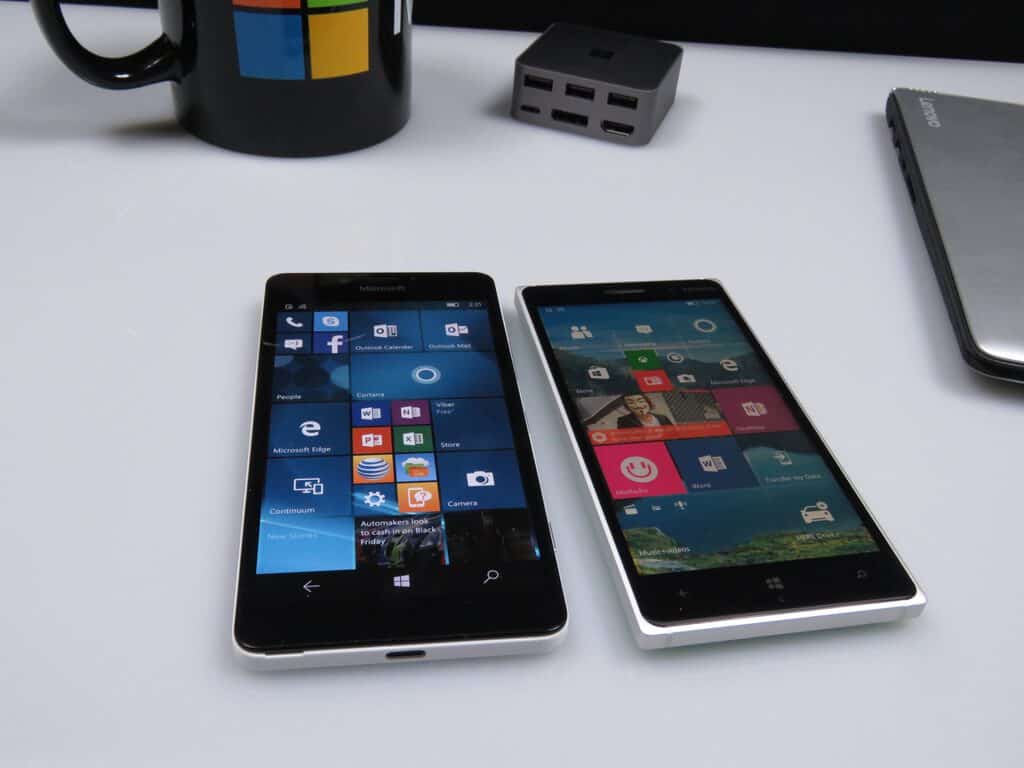
    Lumia 950

    Cancelled Lumia 960 handset leaks

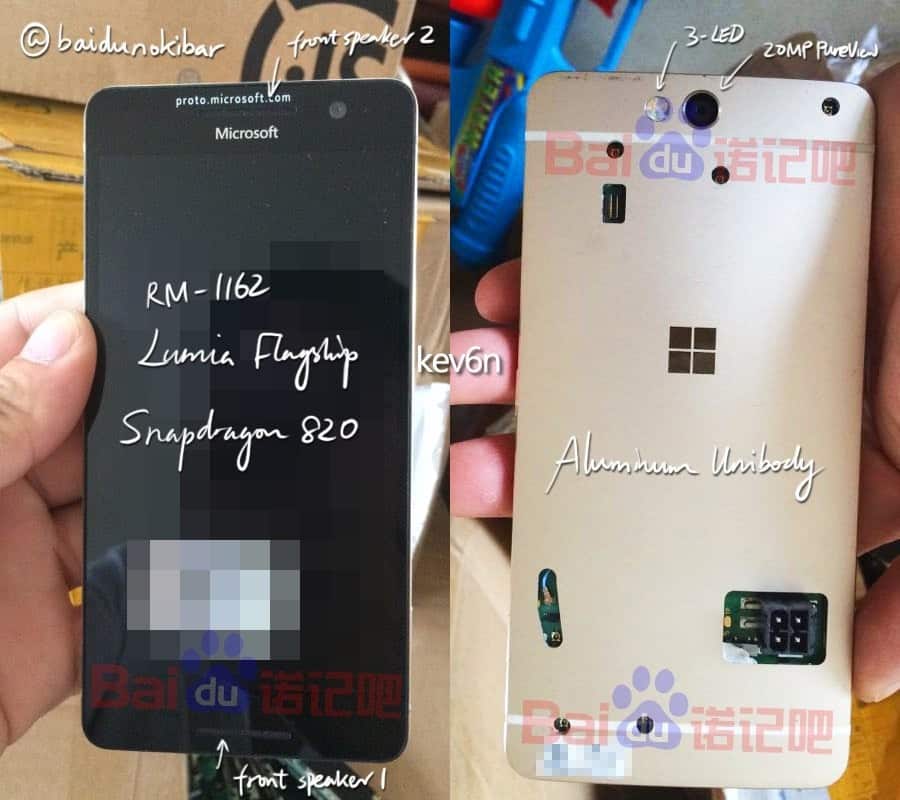
    If you're satisfied with the knowledge that there's something new on the horizon, you might as well check out something old. Photos have recently leaked showing off a prototype for a cancelled Lumia 960 device, which is very similar to the 950, except with an aluminum unibody design and dual front-facing speakers. Apparently, the device is still being used internally as an engineering prototype, and has been dubbed "Northstar."

    The Lumia 960

    The Alcatel Idol 4s is coming to Germany

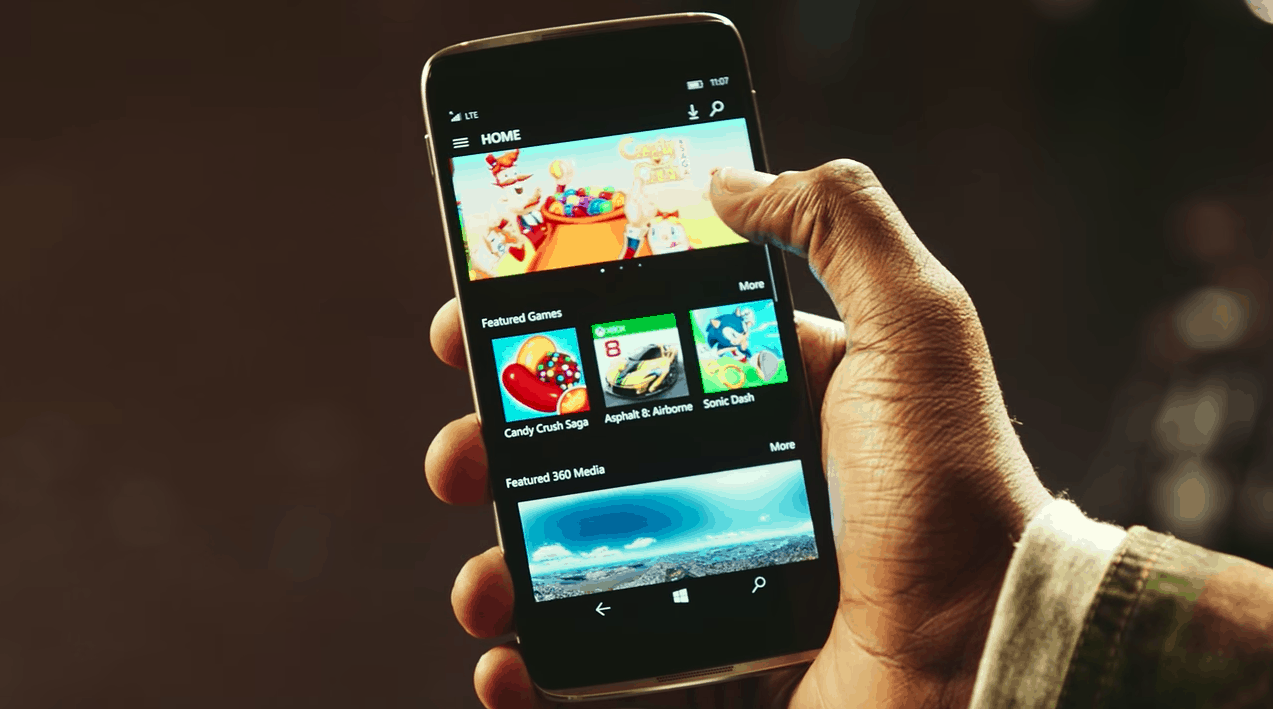
    After a year of availability elsewhere, people in Germany are finally getting access to the Alcatel Idol 4s. Now named the Idol 4 Pro, the device is rumored to be going for a whopping €599 – more than double the price the handset is currently sold at in the states. Either way, it's good that Germans have access to this high quality mobile device. It's unclear at this time whether or not they'll be getting the VR kit that came with the phone stateside.

    Alcatel Idol 4S

    Silverlight support ending soon

    Silverlight hasn't been an extraordinarily popular tool, but there are still some people who use services powered by it. Unfortunately, if you fall under that category, you'll be out of luck soon. According to a tweet from Gustave M, Silverlight support will be leaving the Windows 10 Mobile platform in an upcoming build. The tweet showed an error screen from the platform stating it couldn't run Windows 10 Mobile, along with the word "Sorry" in the body.

    Microsoft Flow releases for Windows 10 Mobile

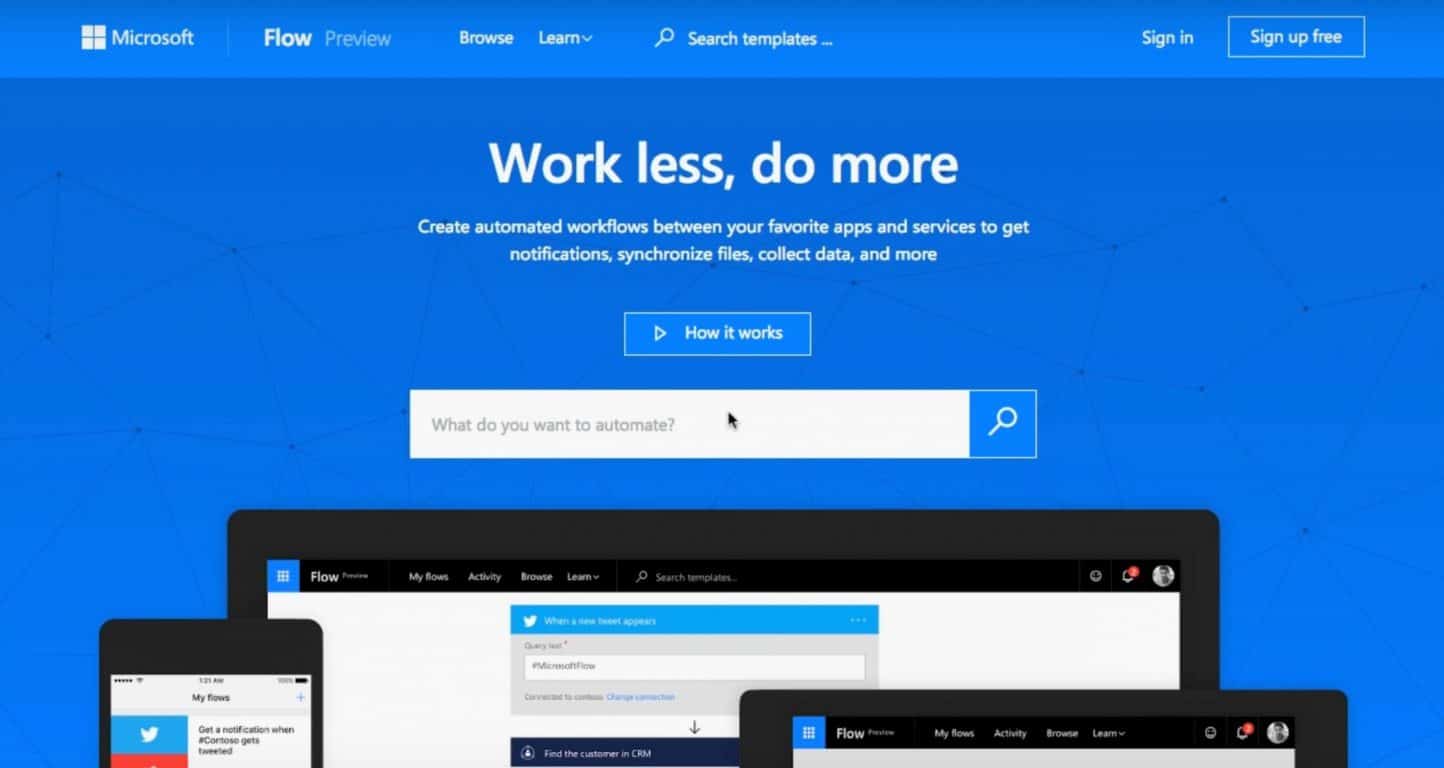
    Microsoft Flow, Microsoft's answer to IFTTT, has finally released on Windows 10 Mobile. Previously available for Android and iOS, the application is meant to automate certain things, making things happen if conditions are met – for instance, making your lights turn out when you leave the house. After a beta period, the app is now available for everybody on the Windows Store.

    Microsoft Flow

    Thanks for joining us. If you want all of the news as it happens, keep an eye on our Windows 10 Mobile tag.

    Further reading: Alcatel Idol 4S, Microsoft, Microsoft Flow, Silverlight, Windows 10 Mobile
    Source: Windows 10 Mobile news recap: Microsoft working on "new experiences" for mobile, Cancelled Lumia 960 leaks and more