Sunday, October 8, 2017

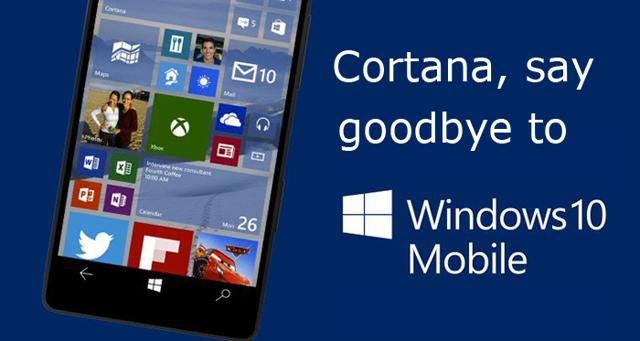
Microsoft Confirms the End of Road for Windows Mobile

Windows 10 smartphones have suffered at the hands of the growing popularity of Android devices and the numerous apps it offers, and although CEO Satya Nadella hinted at a new smartphone earlier this year, a senior executive at the company has confirmed that there is no future for smartphones running Windows 10.

Joe Belfiore, Corporate Vice President at Microsoft, has confirmed that Windows 10 for mobile won't be getting any new features, though the company will continue to support the platform for bug fixes and security updates.

Nearing the end of the noughties, Microsoft's Windows phones were one of the major rivals to iPhone and then emerging Android phones but they saw a drastic downfall over the years.

The last of Microsoft's phones powered by Windows were the Lumia 950 and Lumia 950 XL, and since their launch, the company had stopped developing any new Windows-powered smartphones as it was still figuring out how to restructure their mobile division in face of the loss incurred due to Android's exponentially growing popularity.

He also mentioned that the company isn't planning on releasing any new hardware running on the Windows 10 mobile platform.

This marks the end of Windows Mobile.

Speaking about why Windows 10 Mobile is no longer 'the focus' for the company, Belfiore stated that the lack of options to incentivize developers to create apps for the platform — in face of declining user base — led to this decision.

Microsoft's focus on smartphones running Windows 10 has faced a steady decline in the five years, mainly due to dwindling sales and customer base as well as growth in their Cloud business — culminating in a shift of focus where the profits lie.

Last month, it was revealed that even Microsoft's co-founder Bill Gates doesn't use a Windows smartphone anymore. And no, he doesn't use an iPhone too.

Bill Gates seems to have moved on from the downfall of Windows phone to the more popular choice globally — Android — but didn't reveal exactly which device he is using currently.


Source: Microsoft Confirms the End of Road for Windows Mobile

Why Microsoft Bid Sayonara To Windows Phones And Windows 10 Mobile

HP's announcement that it is discontinuing its Elite x3 Windows 10 Mobile phone further confirmed that Microsoft completely shelved its smartphone ambition.

Nadella himself admitted in his book that he was against Microsoft's purchase of Nokia's old phone business. He wrote off the entire $7.6 billion acquisition.

Nadella never believed that Windows phones can catch up with Android and iOS. Don't expect a Surface phone to be released as long as Nadella is in charge.

My fearless forecast now is that Microsoft will soon discontinue support for Windows 10 Mobile. Microsoft ended support for Windows Phone 8.1 last July.

Shelving Windows 10 Mobile completes a cathartic release for Microsoft from its misadventure in mobile phones.

Microsoft (NASDAQ:MSFT) is being quiet, but it is ready to say sayonara to Windows 10 Mobile. It already ended support for Window Phone 8.1 last July. Getting rid of Windows 10 Mobile should complete the detoxification of Microsoft's failure in mobile. HP, Inc. (NYSE:HPQ) recently announced that it will discontinue its Elite x3 Windows 10 Mobile smartphone.

An unidentified HP executive explained that "Microsoft, as all companies do, decided on a change in strategy and so they are less focused on what they thought they would be focused on today."

(Source: Microsoft)

We did not get the memo but Microsoft made it clear to its OEM partners that Windows 10 Mobile is a walking dead. Microsoft already ended support for Windows Phone 8.1 last July. The culling will continue until Windows 10 Mobile eventually joins the graveyard where Zune and Windows RT were laid to rest.

Nadella's book also revealed he was against Ballmer's idea of buying Nokia's (NYSE:NOK) old phone business. It explained why Nadella ended up writing off the $7.6 billion Lumia phone business that Ballmer acquired. His heart and mind were never for Windows smartphones. He is determined to extricate Microsoft out of its misery in Windows phones.

We can expect that there will never be another phone from Microsoft as long as Nadella is in charge. Consequently, there will be no eulogies, but Windows 10 Mobile's days are numbered. Sooner than later, Microsoft will completely divorce itself from Windows 10 Mobile like it did with its phone hardware business.

There's no point developing/maintaining a mobile operating system when Microsoft has thrown the towel on Windows phones.

The only consolation is that Microsoft got a $1.8 billion tax write-down from Ballmer's ill-fated bet on Windows phones. Windows 10 Mobile also taught us that software developers did not like Microsoft's Universal Windows Platform.

Why Letting Windows 10 Mobile Die Is Cathartic For Microsoft

Raising the white flag and accepting defeat is an act of courage. Accepting the reality that Android and iOS reign supreme on mobile is a back to the future move from Nadella. It allows Microsoft to better adapt to the reality that Android OS devices now outnumber Windows computers/devices.

Without the excess baggage of Lumia and Windows 10 Mobile, Nadella can focus more on his device-agnostic strategy in disseminating Microsoft's software products and services. The prosperity of Microsoft now depends on how effective it can attract (and retain) business and personal users of Android/iOS/MacOS devices to buy/subscribe to Office 365, Skype, OneDrive, and Azure.

Microsoft tried and failed to compete against iPhones. However, its Cellular PC concept which enables Surface hybrid laptops to make phone calls should help it continue disrupting Mac sales.

Cloud Computing, Not Smartphone Computing

A complete retreat from Windows phones and Windows 10 Mobile will let Microsoft focus more on competing better against Amazon (AMZN) Web Services. Microsoft is the clear leader in SaaS (Software-as-a-Service). However, Azure is still a far-second to Amazon when it comes to cloud computing infrastructure services.

The savings from killing the Lumia phone business and Windows 10 Mobile can go to improving Azure.

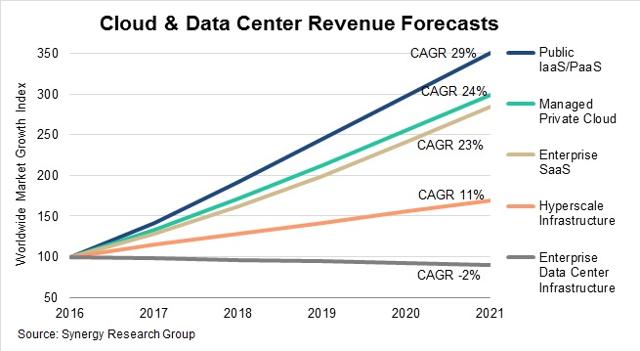
(Source: Synergy Research)

Abandoning Windows phones gives Microsoft more leeway to create new cloud computing services like its Coco Framework Enterprise Blockchain-as-a-Service. A stronger focus on cloud computing is very important for Microsoft. Synergy Research predicted last July that global revenue from cloud computing and SaaS will have a CAGR of 23-29% for the next five years. It will reach $200 billion by 2020.

Public IaaS/PaaS, where Amazon Web Services is the runaway leader (with 34% market share), is going to have the fastest CAGR at 29%.

Conclusion

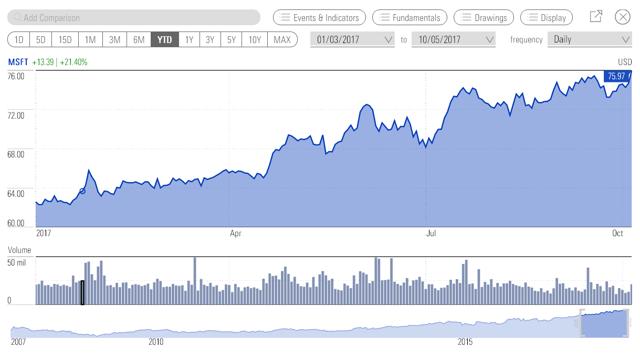
MSFT already touts an YTD gain of +21.40%, but I still rate it as a buy. My takeaway is that Nadella is weaning Microsoft away from its dependency on the Windows ecosystem. A Microsoft that can flourish without its dominant Windows operating system becomes a more resilient company.

(Source: Morningstar)

Microsoft doesn't need its own mobile operating system, mobile app store, and its own brand of phones to benefit from the rise in smartphone usage.

Microsoft's software products and services are now device agnostic and platform independent. Many Android/iOS device users will still be captured customers of Office 365. Let us also never forget that Microsoft will continue to reap patent licensing fees from Android device manufacturers.

The coming demise of Windows 10 Mobile is therefore just another painful lesson that made Microsoft smarter and stronger.

Disclosure: I am/we are long MSFT, AMZN, HPQ, NOK.

I wrote this article myself, and it expresses my own opinions. I am not receiving compensation for it (other than from Seeking Alpha). I have no business relationship with any company whose stock is mentioned in this article.


Source: Why Microsoft Bid Sayonara To Windows Phones And Windows 10 Mobile

Saturday, October 7, 2017

HP ditches the Elite X3, the last Windows Phone in town

HP HAS canned the last major Windows 10 smartphone, the Elite X3, effectively ending the whole sorry saga.

The HP Elite X3 was designed around the much-flaunted Continuum feature in the operating system, which allowed users to plug in a display, keyboard, and mouse and use the device as a laptop or desktop.

The company hasn't exactly been backward about coming forward with its analysis of whose fault the failure was.

At the Canalys Channels Forum in Venice, Nick Lazaridis, EMEA HP Showrunner told El Reg: "X3 was going to bifurcate, there were going to be a number of products."

He means there was going to be a range, but he swallowed a dictionary, seemingly.

He continued: "Microsoft, as all companies do, decided on a change in strategy and so they are less focused on what they thought they would be focused on today.

"Given that, we also had decided that without Microsoft's drive and support there it doesn't make sense. If the software, if the operating system ecosystem isn't there then we are not an operating system company."

Related: Microsoft will kill off its bork-ridden Surface line-up by 2019, apparently

The news comes after an adamant denial earlier in the year that the X3 was in jeopardy. It was understood to have a roadmap into 2019. Now, that will be cut back to a promise of support until 2019, but no new devices.

In fact, it's safe to say that this marks the end of HP's commitment to Windows Mobile, and as such, the effective end of Windows Mobile.

Microsoft had already put nails in the coffin with the end of the Lumia range, signalling the end of the line for thousands of former Nokia employees, culled at the end of the failed experiment.

It is thought Microsoft may still have ambitions for a Surface Phone, but hopefully, that will stay a rumour.

Kevin, the Last Windows Mobile User in the world wasn't available for comment, but we've noticed that the garage door is shut, which is a worry as there seems to be an engine running. ยต


Source: HP ditches the Elite X3, the last Windows Phone in town

How to Find, Download Microsoft Windows Store Apps

How to Shop at Microsoft's Windows Store

Microsoft's Windows Store launched with Windows 8 in 2012 offering only apps and games. Windows 10 in 2015 added music, movies, and TV shows, and April's Creators Update added books. But how can you shop at the Windows Store and what will you find? Let's check it out.

First, you'll need Windows 10 to shop for the full array of items in the Windows Store. And if you're looking for a good book to read, you'll need the Creators Update. To check your version of Windows 10, right-click the Start button. If you see the Settings command in the menu, you have the Creators Update. If you see Control Panel in the menu, you're still running the prior flavor of Windows and need to install the Creators Update, which you can do from the Windows Update screen in Settings.

To open the Windows Store, click on its icon on the Taskbar, or click on the Start button and scroll down the list to the shortcut for Store and click on it.

The Windows Store opens. At the top of the window are the various product categories – Apps, Games, Music, Movies & TV, and Books.

The store's home page opens, flashing the latest promotions and other highlights. Scroll down the home page, and you'll find daily deals, special picks, and most popular items, among other content. Be sure to scroll all the way down the home page to see all the latest lists and promotions.

Shopping for Apps

Let's say you want to shop a specific category. Let's start with apps. Click on the Apps menu. You'll see the latest promoted apps.

Scroll down to see top, featured, top paid, and top free apps, and more.

For any list, you can click on the "Show all" button.

The store then displays the complete list of matching items.

Click on the left arrow before the word Store to return to the previous page. Scroll all the way down to the bottom of the Apps page to see a list of app categories that you can click on and browse.

At the specific category page, you can click on each of the headings at the top to narrow or change the list of items.

If you find a free app you want to download, like Hulu, click on it and select "Get." The app will start downloading, before giving you the option to Launch or Pin to Start.

If you want a paid app, click Get, which will ask you to sign into your Microsoft account if you're not already signed in.

If you've never purchased an app, you'll be asked to add a way to pay: credit card or debit; PayPal; mobile phone; or gift card.

Shopping for Games

Now, click on the Games menu. The Games page pops up, highlighting a certain game or games.

Scroll down the page to see best-selling games, top paid games, top free games, and other lists. Again, scroll all the way down to the bottom of the page, and you'll see a list of game categories that you can browse.

If you find a particular app or game that interests you, click on its entry to view its full page.

If you see an Install button, the game is free for the taking. Click on Install, and the app or game is downloaded and installed. If you see a price tag and Buy button, then the app or game will cost you some cash. Click on the Buy button to download it.

If you've already set up a payment method with Microsoft, Windows asks for your PIN or password to authenticate your identity and asks you to confirm the purchase. If not, you'll be asked to set up a means of payment.

Shopping for Music

Now let's segue to the Music category by clicking on its menu. The Music page pops up highlighting certain artists or albums.

Scroll down the page to see a list of recommended and popular artists and albums. At the bottom of the page you'll find a list of genres. If a particular album or song strikes your fancy, click on its link to see its full page. Click on the price tag if you wish to purchase the album. That music will then be available in the Groove Music app, which will be discontinued as of Dec. 31 and merged with Spotify.

Shopping for Movies & TV

Next, click on the menu for Movies & TV. Scroll down the page to see all the featured movies and TV shows. Click on a specific movie or TV show if you wish to purchase it. It will then be accessible via the Movies & TV app.

Shopping for Books

Then click on the menu for Books. Scroll down the page to see all the book titles. Click on a specific book that you want to purchase. You can read those selections on any Windows 10 device with the Windows Creator update via Microsoft Edge.

Shopping for Specific Items

Maybe you're looking for a specific app, game, album, song, movie, TV show, or book. Instead of browsing the different categories, search for an item by title or other criteria. Type a keyword in the Search field. The store displays a list of potential matches. You can click on one of the suggested matches or click on the Search icon to look for your item.

If you search for your item, the store then displays results across all the product categories.

You can narrow the results to a specific category. Click on the Type menu and then choose a category, such as albums, and the results are refreshed to match your selection.


Source: How to Find, Download Microsoft Windows Store Apps

Friday, October 6, 2017

Why Microsoft Bid Sayonara To Windows Phones And Windows 10 Mobile

HP's announcement that it is discontinuing its Elite x3 Windows 10 Mobile phone further confirmed that Microsoft completely shelved its smartphone ambition.

Nadella himself admitted in his book that he was against Microsoft's purchase of Nokia's old phone business. He wrote off the entire $7.6 billion acquisition.

Nadella never believed that Windows phones can catch up with Android and iOS. Don't expect a Surface phone to be released as long as Nadella is in charge.

My fearless forecast now is that Microsoft will soon discontinue support for Windows 10 Mobile. Microsoft ended support for Windows Phone 8.1 last July.

Shelving Windows 10 Mobile completes a cathartic release for Microsoft from its misadventure in mobile phones.

Microsoft (NASDAQ:MSFT) is being quiet, but it is ready to say sayonara to Windows 10 Mobile. It already ended support for Window Phone 8.1 last July. Getting rid of Windows 10 Mobile should complete the detoxification of Microsoft's failure in mobile. HP, Inc. (NYSE:HPQ) recently announced that it will discontinue its Elite x3 Windows 10 Mobile smartphone.

An unidentified HP executive explained that "Microsoft, as all companies do, decided on a change in strategy and so they are less focused on what they thought they would be focused on today."

(Source: Microsoft)

We did not get the memo but Microsoft made it clear to its OEM partners that Windows 10 Mobile is a walking dead. Microsoft already ended support for Windows Phone 8.1 last July. The culling will continue until Windows 10 Mobile eventually joins the graveyard where Zune and Windows RT were laid to rest.

Nadella's book also revealed he was against Ballmer's idea of buying Nokia's (NYSE:NOK) old phone business. It explained why Nadella ended up writing off the $7.6 billion Lumia phone business that Ballmer acquired. His heart and mind were never for Windows smartphones. He is determined to extricate Microsoft out of its misery in Windows phones.

We can expect that there will never be another phone from Microsoft as long as Nadella is in charge. Consequently, there will be no eulogies, but Windows 10 Mobile's days are numbered. Sooner than later, Microsoft will completely divorce itself from Windows 10 Mobile like it did with its phone hardware business.

There's no point developing/maintaining a mobile operating system when Microsoft has thrown the towel on Windows phones.

The only consolation is that Microsoft got a $1.8 billion tax write-down from Ballmer's ill-fated bet on Windows phones. Windows 10 Mobile also taught us that software developers did not like Microsoft's Universal Windows Platform.

Why Letting Windows 10 Mobile Die Is Cathartic For Microsoft

Raising the white flag and accepting defeat is an act of courage. Accepting the reality that Android and iOS reign supreme on mobile is a back to the future move from Nadella. It allows Microsoft to better adapt to the reality that Android OS devices now outnumber Windows computers/devices.

Without the excess baggage of Lumia and Windows 10 Mobile, Nadella can focus more on his device-agnostic strategy in disseminating Microsoft's software products and services. The prosperity of Microsoft now depends on how effective it can attract (and retain) business and personal users of Android/iOS/MacOS devices to buy/subscribe to Office 365, Skype, OneDrive, and Azure.

Microsoft tried and failed to compete against iPhones. However, its Cellular PC concept which enables Surface hybrid laptops to make phone calls should help it continue disrupting Mac sales.

Cloud Computing, Not Smartphone Computing

A complete retreat from Windows phones and Windows 10 Mobile will let Microsoft focus more on competing better against Amazon (AMZN) Web Services. Microsoft is the clear leader in SaaS (Software-as-a-Service). However, Azure is still a far-second to Amazon when it comes to cloud computing infrastructure services.

The savings from killing the Lumia phone business and Windows 10 Mobile can go to improving Azure.

(Source: Synergy Research)

Abandoning Windows phones gives Microsoft more leeway to create new cloud computing services like its Coco Framework Enterprise Blockchain-as-a-Service. A stronger focus on cloud computing is very important for Microsoft. Synergy Research predicted last July that global revenue from cloud computing and SaaS will have a CAGR of 23-29% for the next five years. It will reach $200 billion by 2020.

Public IaaS/PaaS, where Amazon Web Services is the runaway leader (with 34% market share), is going to have the fastest CAGR at 29%.

Conclusion

MSFT already touts an YTD gain of +21.40%, but I still rate it as a buy. My takeaway is that Nadella is weaning Microsoft away from its dependency on the Windows ecosystem. A Microsoft that can flourish without its dominant Windows operating system becomes a more resilient company.

(Source: Morningstar)

Microsoft doesn't need its own mobile operating system, mobile app store, and its own brand of phones to benefit from the rise in smartphone usage.

Microsoft's software products and services are now device agnostic and platform independent. Many Android/iOS device users will still be captured customers of Office 365. Let us also never forget that Microsoft will continue to reap patent licensing fees from Android device manufacturers.

The coming demise of Windows 10 Mobile is therefore just another painful lesson that made Microsoft smarter and stronger.

Disclosure: I am/we are long MSFT, AMZN, HPQ, NOK.

I wrote this article myself, and it expresses my own opinions. I am not receiving compensation for it (other than from Seeking Alpha). I have no business relationship with any company whose stock is mentioned in this article.


Source: Why Microsoft Bid Sayonara To Windows Phones And Windows 10 Mobile

Microsoft fulfills its plans to make Windows 10 work better with phones, releases Edge Mobile and Microsoft Launcher

If users are not swaying towards Windows 10, Microsoft is bring Windows 10 to users. At least, parts of it. On Thursday, Microsoft announced in a blog post that Microsoft Edge browser will be available for iOS and Android devices. The web browser is currently in preview for iOS and will be coming to Android soon. Moreover, Microsoft also launched the Microsoft Launcher for Android in public preview.

It is part of Microsoft's plans to make its products available across multiple platforms. Microsoft plans to bring Windows 10 PCs closer to Android and iOS devices. In fact, it was a recurrent theme during Microsoft's 2017 Build Conference where the company talked about making Windows 10 work in tandem with phones. Furthermore, it is Microsoft's attempts to make cross-platform usage smoother and more helpful.

The Edge browser for iOS is available for preview under Apple's TestFlight and is limited to 10,000 users. Microsoft has invited Windows Insiders users in the US to test out the browser. Android users too can sign up for the preview which will be made available in the coming few weeks.

Microsoft recently shared Edge browser has 330 million active users. And the company has claimed that the top request from the users have been to make the browser available for phones. And Microsoft has listened and delivered.

The Edge browser on iOS runs on Apple's Webkit engine while on Android, it will run on the Chromium engine, instead of its own EdgeHTML engine.

That doesn't mean you can't have all your favourite features — Reading List, New Tab page, Reading View and more. But most importantly, Edge Mobile will support Continue on PC functionality, that lets you pick up right where you left off on your Windows PC and vice versa.

Continue on PC though requires you to have the Windows 10 Fall Creators Update which arrives on October 17th. Nevertheless, if you don't have the update, the browser and launcher will still work.

Continue on PC leverages Microsoft's cloud service and stores whatever you were doing to the Microsoft Graph. Hence, it is necessary to login to your Microsoft Account.

There are some limitations on usage though. For one, you will need to be on US English although Microsoft has promised to add support for more countries and languages. Android 4.4 KitKat or higher and iOS 10.2 or higher is needed. Plus there's no support for Android tablets and iPad yet.

Apart from the browser, Microsoft also launched a launcher for Android. It's Android-only because Apple doesn't allow anyone to mess with its launcher. And this is Microsoft's second such launcher for Android. The first being the Arrow launcher developed as a project by Microsoft Garage, that is the company's arm for experimental appls for Android and iOS.

But this isn't an evolution of the Arrow launcher. It's a successor sort of. People using Arrow Launcher Beta will get the launcher today, and once it is out of preview, user s will be automatically upgraded to it.

The launcher is based on Microsoft's Fluent Design and is customisable. You can put icons of your favourite people right on your home screen. Swipe right for a tailored feed of important events, top news, favourite people and frequently used apps. Set background colours, add gestures and more.

Furthermore, Continue on PC will be available for the launcher as well. You can resume work on your photos, documents and emails and so on. The launcher is a far more useful application of the feature than the browser so to say, and we hope Microsoft takes the features go places.


Source: Microsoft fulfills its plans to make Windows 10 work better with phones, releases Edge Mobile and Microsoft Launcher

Thursday, October 5, 2017

After first denying it, HP confirms axing of Elite x3 smartphone

Reviews, News, CPU, GPU, Articles, Columns, Other

"or" search relation.

Accessory, AMD, Android, Apple, ARM, Audio, Bay Trail, Bristol Ridge / Stoney Ridge, Broadwell, Business, Charts, Chinese Tech, Chromebook, Convertible / 2-in-1, Cyberlaw, Deal, Desktop, Fail, Galaxy Note, Galaxy S, Gamecheck, Gaming, Geforce, Google Nexus / Pixel, How To, iPad Pro, iPhone, iPhone 7, iPhone 8, Kaby Lake, Linux / Unix, MacBook, Monitor, MSI, Notebook, OnePlus Two, Phablet, Rumor, Ryzen (Zen), Security, Skylake, Smart Home, Smartphone, Smartwatch, Software, Storage, Surface Pro 4, Tablet, Touchscreen, Ultrabook, Virtual Reality (VR) / Augmented Reality (AR), Wearable, Windows, Workstation, XPS, Zen

Ticker

 
Source: After first denying it, HP confirms axing of Elite x3 smartphone